Workflow & Usage
-
Add images
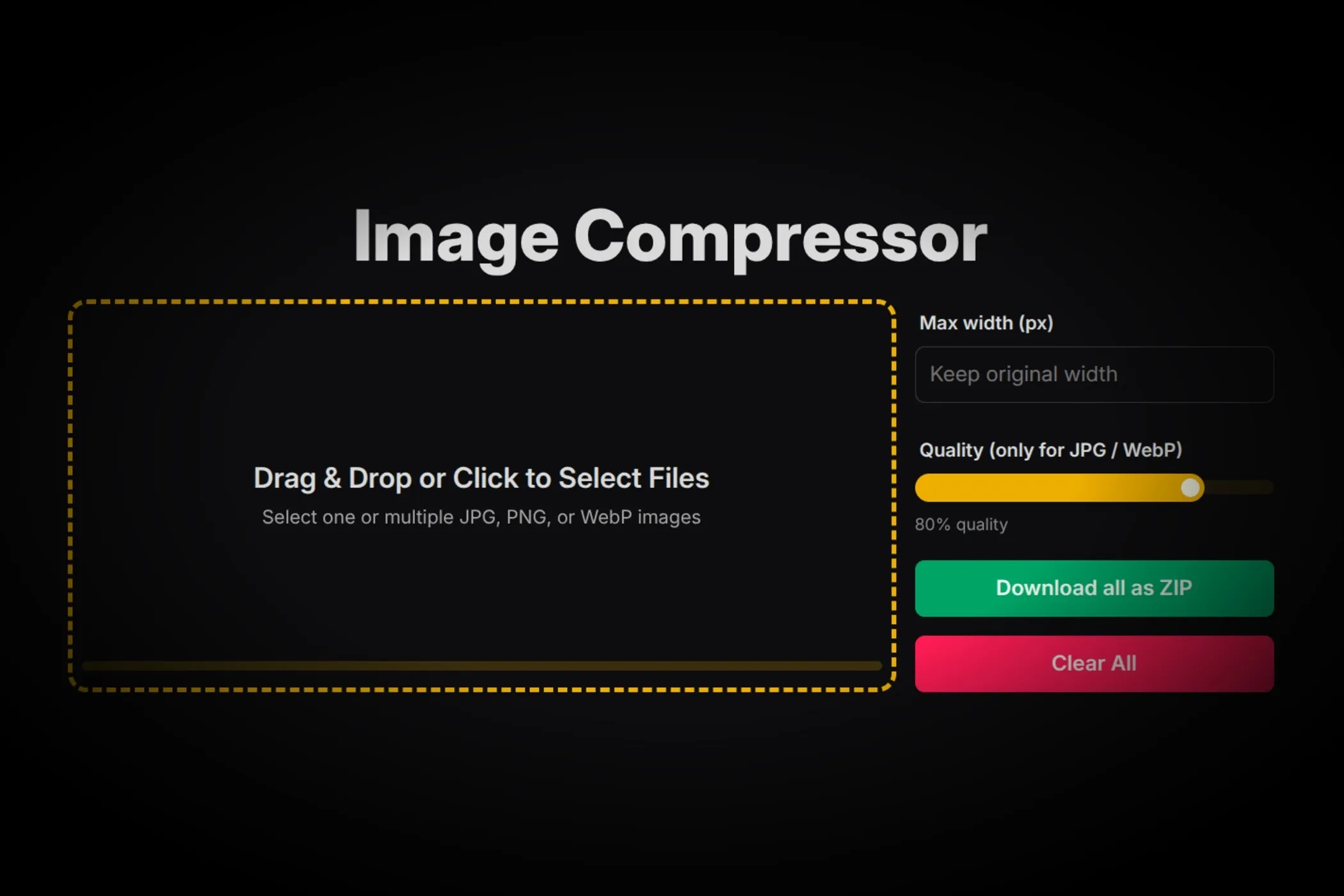
Drag & drop, paste, or click to select one or more JPG, PNG, or WebP files. Images are loaded instantly and previews appear immediately. -
Set global padding
Enter padding values in pixels. Use Uniform padding to apply the same spacing on all sides, or disable it to control top, right, bottom, and left independently. -
Choose background behavior
Leave padding transparent for PNG/WebP images, or enable background color and pick any color using the color picker and hex input. The preview updates live. -
Fine-tune individual images
Click Edit on any image card to open the editor modal. Adjust padding values for that image only and preview the exact result before saving. -
Download results
- Click Download on a card to export a single image
- Or use Download all as ZIP to export the entire batch at once
Everything updates instantly — no waiting, no uploads.
Use Cases
-
Logos & Brand Assets
Add consistent breathing room around logos for websites, slide decks, print, and client handoffs. -
Design Systems & UI Assets
Normalize spacing across icons, illustrations, and UI images so everything aligns cleanly in layouts. -
Social Media Graphics
Add safe margins to prevent cropping on platforms that auto-trim edges or apply aspect constraints. -
Email & Newsletter Images
Create padding so images don’t touch container edges in restrictive email clients. -
E-commerce & Product Images
Add uniform margins to product photos for cleaner grids and consistent presentation. -
Asset Cleanup & Refactoring
Fix inconsistent spacing in older image libraries without re-editing or resizing the originals.
Tips for Best Results
- Use uniform padding first. It’s the fastest way to achieve visual consistency across a batch.
- Override sparingly. Per-image padding is best used for edge cases or special assets.
- Prefer PNG or WebP for transparency. JPEG exports will always flatten padding to white.
- Use the Edit modal for precision. The modal preview shows the final result exactly as it will be downloaded.
- Resize before padding if needed. Padding increases canvas size — it doesn’t scale the image itself.
How It Works
The Image Padding Adjuster runs entirely in your browser, using modern web graphics APIs:
- Images are decoded with
createImageBitmapfor fast, accurate rendering. - Padding is applied by creating a larger canvas and drawing the original image inside it without scaling.
- Transparent padding is preserved for formats that support it.
- JPEG exports are automatically flattened to avoid transparency artifacts.
- Batch exports are bundled using JSZip, while single images are downloaded directly.