Workflow & Usage
-
Upload an image Drag & drop or click to select a single JPG, PNG, or WebP file. As soon as the image loads, the tool extracts its color palette automatically.
-
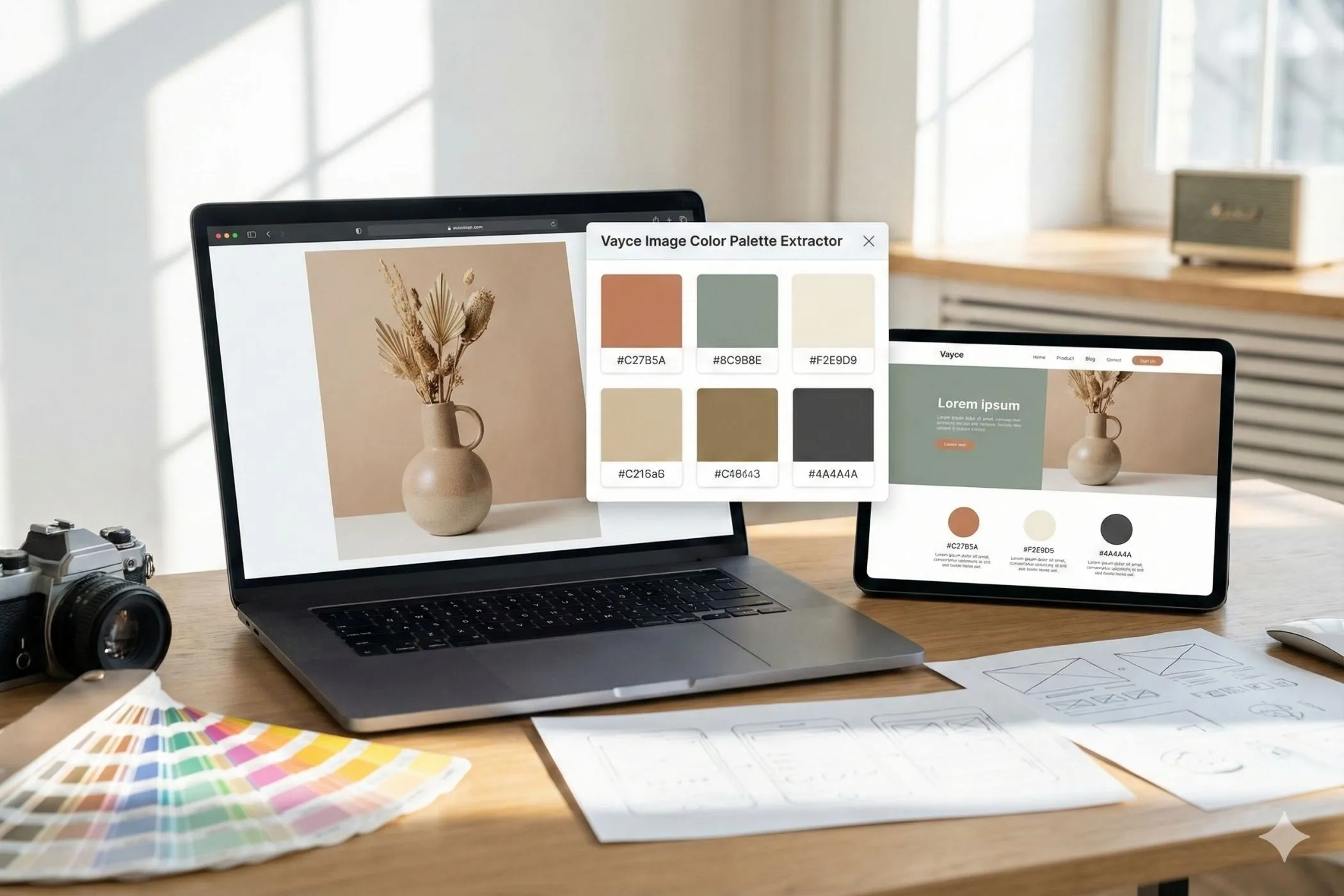
View the extracted palette You’ll immediately see:
- A preview of the image
- A list of semantic swatches (
Vibrant,Muted,DarkVibrant, etc.) - HEX and RGB values
- A corresponding CSS variable name for each color
-
Copy CSS or JSON Two code boxes appear on the right:
- CSS Variables — copy a ready-to-paste
:rootblock - JSON Tokens — ideal for design systems or style dictionaries
- CSS Variables — copy a ready-to-paste
-
Refine or replace Click Clear to remove the current image and load another. The palette regenerates instantly.
Use Cases
-
Theme & UI design Get natural color sets for buttons, backgrounds, and accents based directly on your hero images or screenshots.
-
Branding & identity work Turn photos, product shots, or logos into consistent color palettes.
-
Social & marketing design Build cohesive visuals based on extracted brand-aligned colors.
-
Front-end development Copy CSS variables or import JSON tokens into Tailwind, React apps, Astro projects, or design token pipelines.
-
Photography & creative workflows Extract dominant tones for editing decisions, LUTs, or style guides.
Tips for Best Results
-
Use images with clear color regions. Vibrant works best when there are strong subjects or distinct areas.
-
Avoid tiny or noisy images. Larger, cleaner pictures create more accurate palette clusters.
-
Use semantic roles intentionally.
Vibrantoften makes a strong accentMutedis good for backgroundsDarkMutedandDarkVibrantcan support contrast themes
-
Copy CSS variables for theme overrides. Works perfectly with Tailwind’s
theme.extend.colors.
How It Works
This tool is fast and fully privacy-preserving, powered by modern browser APIs:
-
Canvas rendering The uploaded image is decoded and analyzed pixel-by-pixel inside your browser.
-
node-vibrant color clustering Uses MMCQ (median cut quantization) to determine perceptually important colors.
-
Semantic swatch mapping Colors are intelligently labeled (
Vibrant,Muted, etc.) to make the palette more design-ready. -
On-device execution No servers, no uploads, no tracking — everything happens locally using Canvas, Web APIs, and optimized color algorithms.
-
Export-friendly output CSS variables and JSON tokens are generated automatically for easy reuse in modern design systems.